Ice cream soda was invented in Philadelphia in 1874 by Robert M. Greene. It was created to celebrate the fiftieth anniversary of the Franklin Institute. Idea: Children could make ice cream sodas.
Jun 202025
Ice cream soda was invented in Philadelphia in 1874 by Robert M. Greene. It was created to celebrate the fiftieth anniversary of the Franklin Institute. Idea: Children could make ice cream sodas.
Caroline Willard Baldwin became the first woman to obtain a doctor of science degree in 1895. She graduated from Cornell University. She wrote an article, A Photographic Study of Arc Spectra, for the Physical Review journal. She then taught physics at the California School of Mechanical Arts.
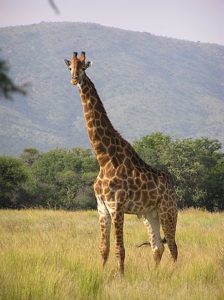
Giraffe
World Giraffe Day is today! The Giraffe Conservation Foundation picked today to celebrate giraffes because the animals have the longest necks and today is the longest day in the northern hemisphere and the shortest day in the southern hemisphere. The International Union for the Conservation of Nature (IUCN) states that giraffes are now rated as vulnerable, meaning we all need to protect the animals.
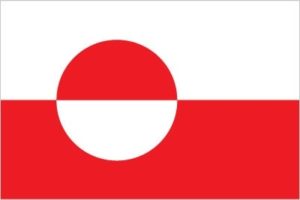
Flag of Greenland
Greenland celebrates the longest day of the year, a national holiday. Greenland is a part of the Danish monarchy, but it is self-governing. According to the CIA World Factbook, Greenland is a little more than three times the size of Texas. Because it is located so far north, most of the country is permafrost. Greenland has the world’s second largest ice cap. About 57,000 people live in the country, mostly along the southern coast. The economy is based on fishing, mining, and tourism. Children can learn more at: Greenland.

New Hampshire Flag
New Hampshire became the ninth state of the United States by ratifying the Constitution in 1788. It was named after the English county Hampshire. The capital is Concord, and its motto is “Live Free or Die.” It ranks forty-fourth in area and forty-second in population. Mt. Washington, located in New Hampshire, is the tallest peak in New England. Martin Pring traveled its coast in 1603, and Samuel de Champlain explored the area in 1604. Children could visit an Internet site at: New Hampshire.
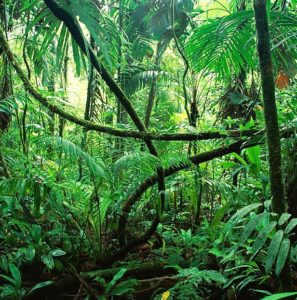
Rainforest in Chiapas, Mexico
World Rainforest Day is today! Started in 2017 by the Rainforest Partnership, the day stresses the importance of rainforests, the plants, the animals, and the cultures that live within. Two types of rainforest exist: the temperate rainforest and the tropical rainforest. The tropical rainforest has four layers: the emergent layer, the canopy, the understory, and the forest floor. Children can learn more at: World Rainforest Day.
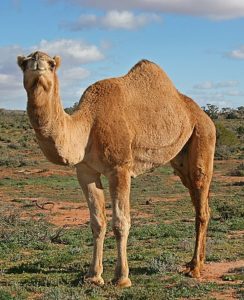
Dromedary Camel
World Camel Day is today! The day celebrates such unique animals, able to travel long distances with little water. Two types of camels exist: the Dromedary one-hump and the Bactrian two-hump. About 90% of all camels are Dromedary. The Bactrian is on the IUCN Red List as Critically Endangered. All camels are herbivores. Children can learn more at: Camels.
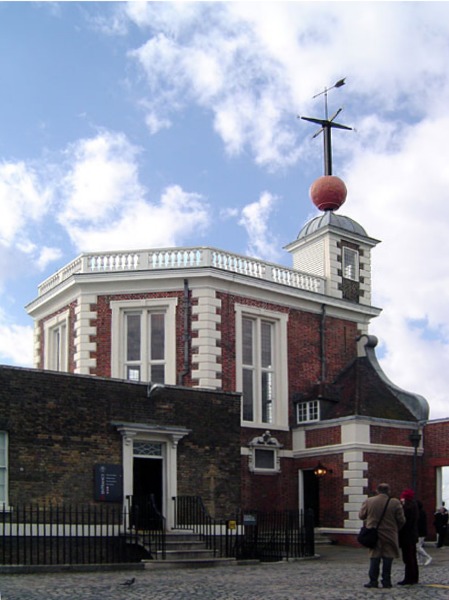
Royal Greenwich Observatory
Courtesy of ChrisO
Royal Greenwich Observatory was established in 1675 by order of Charles II. The building has significant historical and scientific connections. Today’s Prime Meridian goes through the property. Greenwich Mean Time was calculated there until 1954. Today the building is a tourist attraction. Children can visit its website at: Royal Greenwich Observatory.

Doughnuts
Doughnut was invented in 1847. According to legend, Elizabeth Gregory made the first doughnuts with nuts in the middle. Her son, sea captain Hanson Gregory, cut out the center with a round pepper tin. Now about ten billion doughnuts are consumed in the United States each year. Children could celebrate the doughnut invention in several ways. They could poll friends and family as to favorite types of doughnut. They could invent a new flavor of doughnut. Of course, they could make or buy doughnuts and then consume!
V-Mail (Victory Mail) began in 1942 as World War II brought many soldiers overseas. To conserve space on transport planes, letters were opened and photographed. A roll of film held 1,600 letters. The film was mailed overseas, and the letters were printed. The process ceased November 1, 1945, when the war ended. Older children could learn more at: Victory Mail.